Funding Rural Health: Insights From FORHP Grant Awards Nationwide and in Kansas

Key Points

  • From 2019–2023, the Federal Office of Rural Health Policy (FORHP) distributed 4,088 awards across 75 programs, totaling $2.32 billion in funding across all 50 states.
  • During that time, the leading primary focus area for FORHP awards in the U.S. and Kansas was COVID-19 response (29.3 percent and 49.2 percent respectively).
  • Total FORHP funding increased in 2020 and 2021, with most awards and funding focused on COVID-19 response, but decreased below pre-pandemic levels by 2023.
  • Nationally, most FORHP awards from 2019–2023 went to recipients located in fully rural counties (53.0 percent), but most funding (65.1 percent) went to recipients in counties classified as not fully rural, highlighting the scope and breadth of FORHP programs.
  • Kansas grantees received almost $71.9 million in FORHP funding from 2019–2023, the seventh highest amount of any state, with $10.3 million (14.4 percent) going to recipients located in fully rural counties.
This issue brief is part of a series examining the role the Federal Office of Rural Health Policy (FORHP) plays in supporting rural communities in Kansas and across the U.S. This brief uses publicly available data from the Health Resources and Services Administration (HRSA) Data Warehouse. The analyses, interpretations and conclusions are those of the authors.

Introduction

Between 2019 and 2023, a period shaped by the COVID-19 pandemic, the Federal Office of Rural Health Policy (FORHP) distributed 4,088 awards across 75 programs, totaling $2.32 billion in funding across all 50 states.

FORHP funding represents an important part of a broader federal effort to increase access to high-quality health care services for rural communities. While all FORHP funding is designed to support rural community health, individual grant programs vary in their specific focus, requirements and size. In many cases, the best positioned applicants or recipients for some FORHP grants — such as those focused on research or statewide technical assistance — tend to be in cities and urban areas. Where small, rural-based organizations do meet the requirements of specific grant opportunities, they may face capacity challenges in completing the grant application or submitting a competitive grant application.

Nationally, most FORHP awards went to lead recipients located in counties considered by FORHP to be fully rural (53.0 percent). Most funding (65.1 percent) went to lead recipients in counties not considered fully rural — often for larger scale programs, such as national information dissemination, research or technical assistance. During this time, the federal government responded to the COVID-19 pandemic, with COVID-19-focused awards accounting for nearly half of all FORHP funding in Kansas from 2019–2023.

In the following, the distribution of FORHP funding across the U.S. is explored in more detail, with a particular focus on how FORHP funding supports efforts in Kansas. A better understanding of how FORHP has served rural communities can inform future discussions around federal funding for rural health efforts.

Key Definitions and Methodology

This brief uses the FORHP definition of rural, categorizing all counties into one of two groups: Fully FORHP Rural and Not Fully FORHP Rural.

In fully rural counties, all census tracts are defined as rural by FORHP, while not fully rural counties have at least one census tract that is not defined as rural by FORHP. All award recipients, including those located in not fully rural counties, are expected to serve rural populations as part of their grant program.

Read more about FORHP’s definition of rurality at https://www.hrsa.gov/rural-health/about-us/what-is-rural.

For this analysis, an “award” refers to one grant allocated to a grantee for a single year. A grantee may receive multiple individual awards within the same year, including from different program types and each year of funding is counted as a separate award. Awards to territories were excluded.

Award primary focus area was identified using publicly accessible Notice of Funding Opportunity documents and program descriptions. Location and rurality categories were determined using the listed recipient county and FORHP rurality definitions. More details can be found in the technical note.

Findings

FORHP Funding by Primary Focus Area

The number of awards, total funding amount and average award size from 2019–2023 varied across primary focus area (Figure 1). Nationally, the highest number of awards focused on health care access and service delivery, while the largest share of total funding supported COVID-19 response. Workforce development and training had the highest average award size at $943,000, followed by research and policy analysis at $905,000, though both represented less than 5 percent of all awards.

In Kansas, award distribution across the primary focus areas differed from the national dispersal. Substance use and behavioral health accounted for 2.2 percent of Kansas’ total funding, compared to 29.1 percent nationally. COVID-19 response represented 49.2 percent of Kansas’ total funding, with an average award of $1.6 million exceeding national figures of 29.3 percent and $714,888 respectively. Research and policy analysis comprised 18.3 percent of Kansas’ funding, averaging $2.6 million, compared to 3.1 percent and $905,468 nationally.

The finding of fewer, but larger, awards for workforce development and training and for research and policy analysis is likely influenced by the nature of the programs in those two focus areas, which tend to have a broader national or regional focus, higher award amounts and fewer grantees. For example, the Rural Health Best Practices and Community Development Cooperative Agreement, a large national program with a single grantee per year, was awarded to the National Rural Health Association, which is based in Kansas but serves rural communities across the country.

Figure 1. FORHP Award and Funding Summary by Primary Focus Area, Kansas and Nationwide (2019–2023)

Note: An “award” refers to one grant allocated to one grantee for a single year. Multiple years of funding in a single program were counted separately for each year. Federal Office of Rural Health Policy (FORHP) programs vary in size and scope, which impacts award amounts. Territories were not included. Awards were classified into seven categories based on title, purpose and descriptions in the notice of funding opportunity (NOFO) and on the Health Resources and Services Administration (HRSA) website. Values are rounded to the nearest hundred thousand dollars. See technical note for additional detail.

Source: Kansas Health Institute analysis of data from FORHP within the Health Resources and Services Administration (HRSA). Awarded Grants file downloaded from https://data.hrsa.gov/data/download in October 2024. The Awarded Grants file is regularly updated by FORHP; however, this analysis uses fixed historical data from 2019–2023. Notice of funding opportunity (NOFO) documents primarily downloaded in November and December 2024.

COVID-19 Impacts on FORHP Funding

Although COVID-19 awards were only issued from 2020–2022, they accounted for a significant portion of total funding, reflecting both the scale of the pandemic and FORHP’s response. From 2019–2023, COVID-19 awards made up nearly half (49.2 percent) of all FORHP funding in Kansas (Figure 1), and 29.3 percent nationally.

In 2021, total FORHP funding increased over two- fold nationally (Figure 2) and over four-fold in Kansas from pre-pandemic levels, peaking at $782.1 million and $34.1 million, respectively. As pandemic-specific funding tapered off, total funding declined in 2022. In 2023, the national funding amount was $9.2 million (2.7 percent) lower than in 2019. FORHP grants in Kansas followed a similar pattern, with a larger relative decrease — 2023 funding was $1.4 million (18.9 percent) lower than in 2019.

During the peak pandemic years, 2020–2022, over 75 percent of FORHP’s national COVID-19-focused funding went to recipients located in counties classified as not fully rural, even though funds targeted rural areas. This may point to a federal prioritization of larger national or statewide organizations to provide technical support, educational content or direct support for service delivery during the COVID-19 pandemic. For example, the Kansas Department of Health and Environment (KDHE), serving as Kansas’ State Office of Rural Health (SORH), received a $23.5 million Small Hospital Improvement Program (SHIP) COVID Testing and Mitigation grant, the largest FORHP award in the state, accounting for 32.6 percent of total funding from 2019-2023. Although detailed sub-award data are unavailable, this funding was designed to support the 91 eligible rural hospitals participating in SHIP.

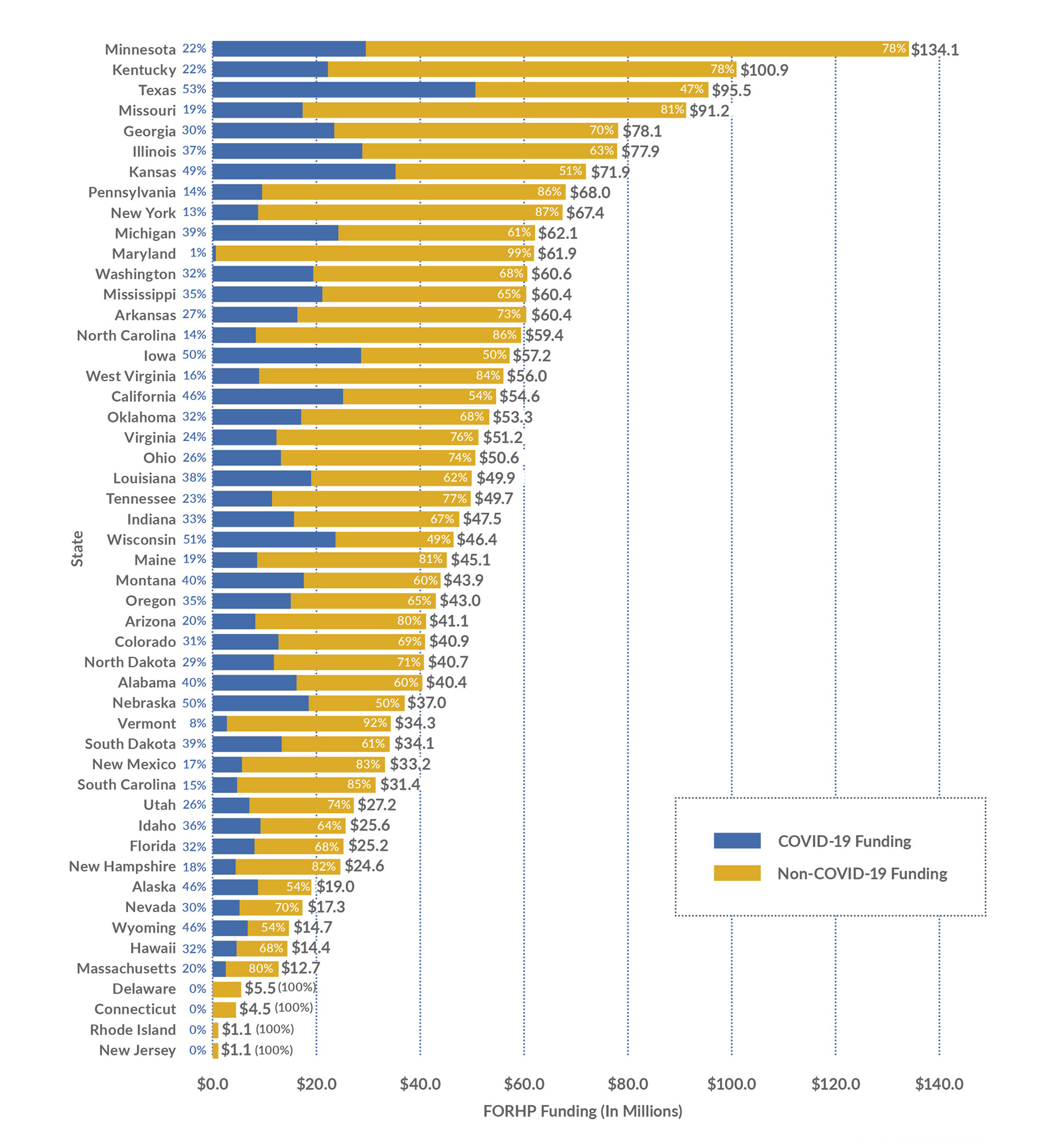
Kansas represents one example within a broader national landscape, where states varied considerably in both the total amount of FORHP funding awarded and the proportion allocated to COVID-19-related activities (Figure 3). From 2019–2023, total FORHP funding ranged from approximately $1.1 million awarded to grantees in New Jersey and Rhode Island for their State Offices of Rural Health to $134.1 million awarded to Minnesota-based grantees, which included several large national programs. The share of funding dedicated to COVID-19-related grants also varied. In Connecticut, Delaware, New Jersey and Rhode Island, no grantees were awarded COVID- 19-specific funding, likely due to their limited number of rural health care providers, while in California, Iowa, Kansas, Texas and Wisconsin, COVID-19 funding accounted for about half of each state’s total amount of FORHP funding. These state differences may reflect variation in states’ rural health infrastructure.

Figure 2. National FORHP Funding, COVID-19 Focused and Non-COVID-19 Focused (2019-2023)

Note: An “award” refers to one grant allocated to one grantee for a single year. Multiple years of funding in a single program were counted separately for each year. Federal Office of Rural Health Policy (FORHP) programs vary in size and scope, which impacts award amounts. Territories were not included. Funding amounts were categorized as COVID-19 or Non-COVID-19 based on the program name and funding purpose listed in the HRSA Awarded Grants dataset. Values are rounded to the nearest hundred thousand dollars. See technical note for additional detail.

Source: Kansas Health Institute analysis of data from FORHP within the Health Resources and Services Administration (HRSA). Awarded Grants file downloaded from https://data.hrsa.gov/data/download in October 2024. The Awarded Grants file is regularly updated by FORHP; however, this analysis uses fixed historical data from 2019–2023. Notice of funding opportunity (NOFO) documents primarily downloaded in November and December 2024.

Figure 3. Total FORHP Funding and COVID-19 Funding as a Percentage, by State (2019-2023)

Note: An “award” refers to one grant allocated to one grantee for a single year. Multiple years of funding in a single program were counted separately for each year. Federal Office of Rural Health Policy (FORHP) programs vary in size and scope, which impacts award amounts. Territories were not included. Funding amounts were categorized as COVID-19 or Non-COVID-19 based on the program name and funding purpose listed in the HRSA Awarded Grants dataset. Values are rounded to the nearest hundred thousand dollars. See technical note for additional detail.

Source: Kansas Health Institute analysis of data from FORHP within the Health Resources and Services Administration (HRSA). Awarded Grants file downloaded from https://data.hrsa.gov/data/download in October 2024. The Awarded Grants file is regularly updated by FORHP; however, this analysis uses fixed historical data from 2019–2023. Notice of funding opportunity (NOFO) documents primarily downloaded in November and December 2024.

FORHP Funding by Recipient Rurality

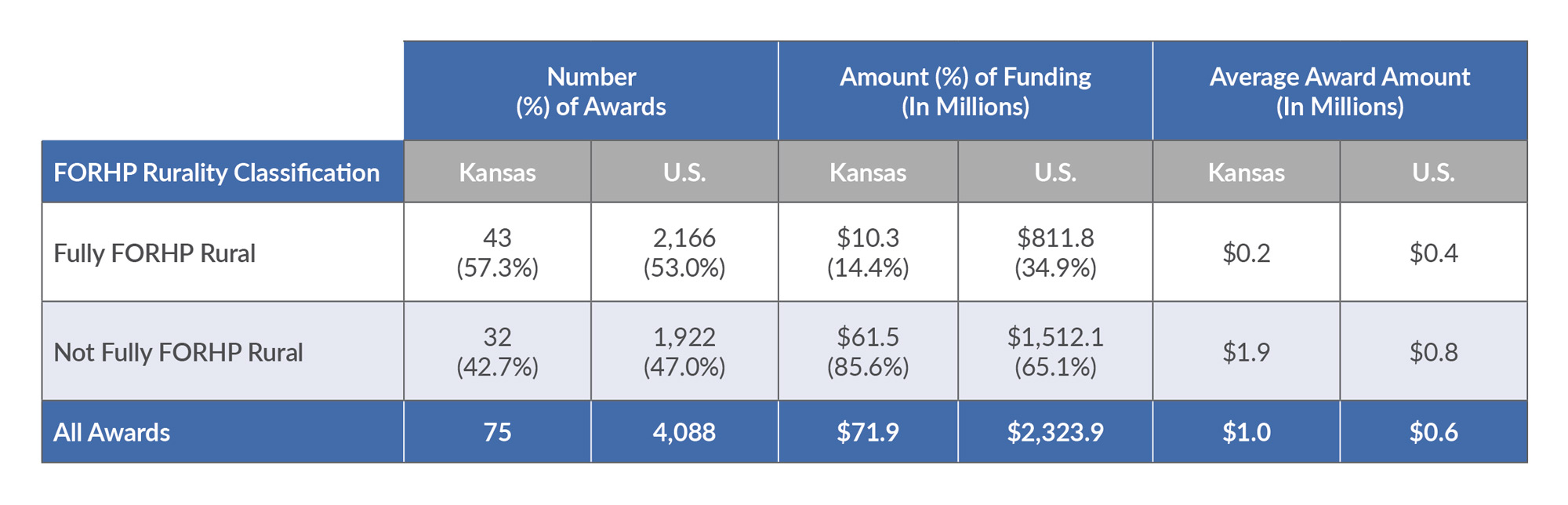
From 2019–2023, 2,166 of 4,088 FORHP awards (53 percent) were distributed to lead grantees located in counties classified as fully rural, while 1,922 (47 percent) were awarded to those in counties classified as not fully rural. However, funding distribution did not mirror this pattern. Of the $2.32 billion in grant funding awarded by FORHP, $811.8 million (34.9 percent) went to grantees in fully rural counties, while the larger share — $1.51 billion (65.1 percent) — went to grantees located in counties classified as not fully rural.

In Kansas, 43 of the 75 awards (57.3 percent) went to grantees in fully rural counties, slightly above the national percentage (53.0 percent). Yet, those 43 awards totaled $10.3 million, or 14.4 percent of the state’s total FORHP funding, compared to 34.9 percent nationally.

Average award sizes were larger for recipients in not fully rural counties, both nationally and in Kansas. Across the U.S., the average award amount to recipients in fully rural counties was about half that of awards to recipients in not fully rural counties. The pattern was similar in Kansas but larger, with grants to recipients in not fully rural counties nearly eight times larger, on average, than those to recipients in fully rural counties (Figure 4).

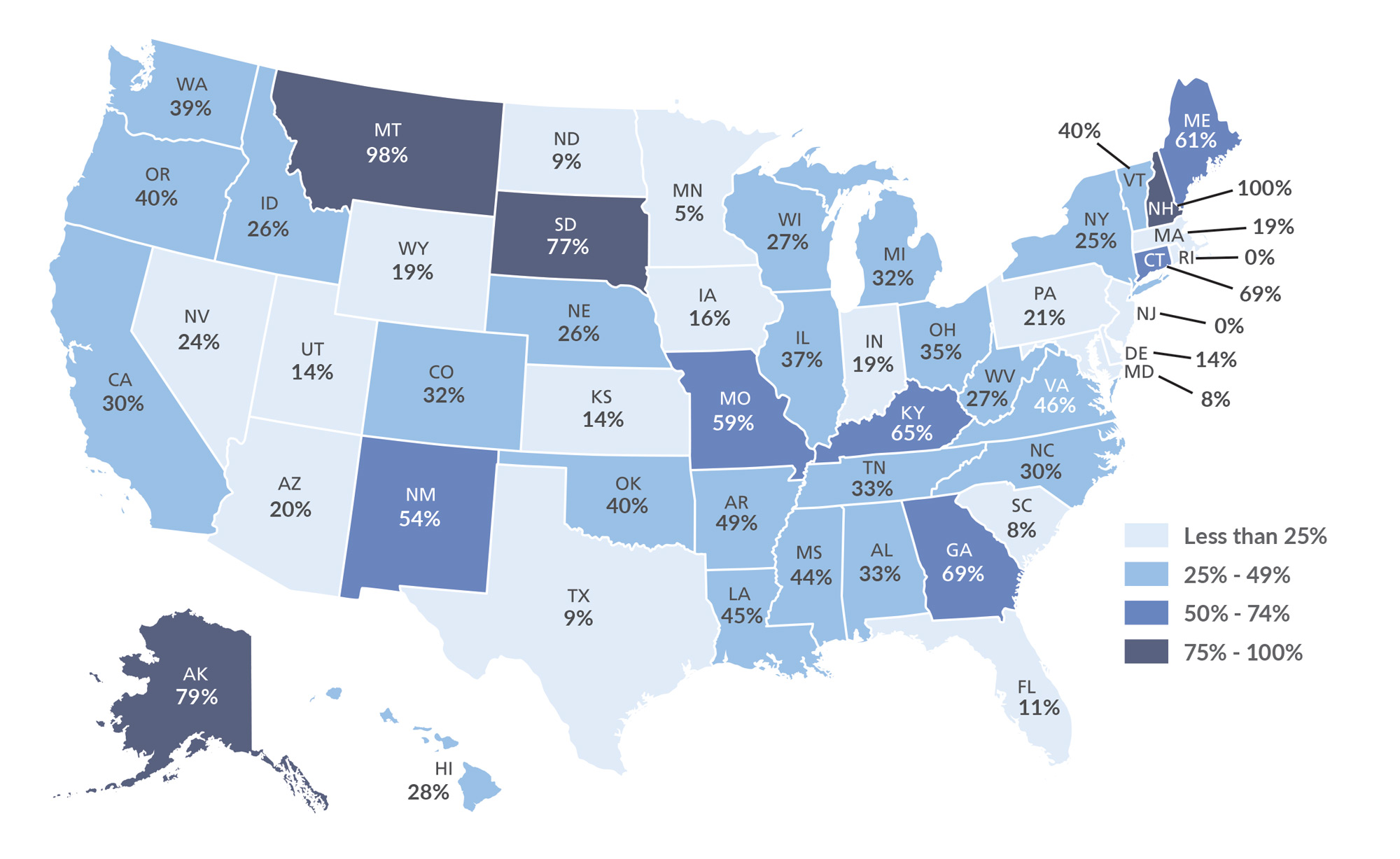
States vary in the amount and percentage of funding going directly to lead grantees located in rural counties (Figure 5). Minnesota led overall with $134.1 million across 104 awards and 26 programs, though 95 percent went to grantees in non-rural counties. In contrast, New Hampshire’s $24.5 million in funding went entirely to lead grantees in fully rural counties.

This pattern reflects the broader national trend in which city-based entities — including national associations, research institutions, large health systems and state agencies — administer fewer but larger rural-serving awards. This reflects differences in eligibility and organizational capacity, as well as the presence of institutions equipped to manage broader programs such as technical assistance or research initiatives. In some cases, urban grantees, like state agencies, also distribute portions of their funding to local entities.

In Kansas, KDHE, which received 59.9 percent of FORHP funding among Kansas grantees, is located in Shawnee County, a not fully rural county. Similarly, both the National Rural Health Association and the University of Kansas Medical Center are based in not fully rural Kansas counties (Johnson and Wyandotte) but received FORHP funding to serve rural communities across the state and nation.

Figure 4. FORHP Award and Funding Summary by Rurality, Kansas and Nationwide (2019-2023)

Note: An “award” refers to one grant allocated to one grantee for a single year. Multiple years of funding in a single program were counted separately for each year. Federal Office of Rural Health Policy (FORHP) programs vary in size and scope, which impacts award amounts. Territories were not included. Awards were classified based on the county of the recipient organization and their corresponding FORHP rurality classification. Values are rounded to the nearest hundred thousand dollars.

Source: Kansas Health Institute analysis of data from FORHP within the Health Resources and Services Administration (HRSA). Awarded Grants file downloaded from https://data.hrsa.gov/data/download in October 2024. The Awarded Grants file is regularly updated by FORHP; however, this analysis uses fixed historical data from 2019–2023. County and Census Tract Excel file with FORHP rurality classifications downloaded from https://www.hrsa.gov/rural-health/about-us/what-is-rural/data-files in February 2025.

Figure 5. Percent of FORHP Funding Going to Recipients in Fully Rural Counties, by State, 2019–2023

Note: An “award” refers to one grant allocated to one grantee for a single year. Multiple years of funding in a single program were counted separately for each year. Federal Office of Rural Health Policy (FORHP) programs vary in size and scope, which impacts award amounts. Territories were not included. Awards were classified based on the county of the recipient organization and their corresponding FORHP rurality classification.

Source: Kansas Health Institute analysis of data from FORHP within the Health Resources and Services Administration (HRSA). Awarded Grants file downloaded from https://data.hrsa.gov/data/download in October 2024. The Awarded Grants file is regularly updated by FORHP; however, this analysis uses fixed historical data from 2019–2023. County and Census Tract Excel file with FORHP rurality classifications downloaded from https://www.hrsa.gov/rural-health/about-us/what-is-rural/data-files in February 2025.

FORHP Grant Programs in Kansas

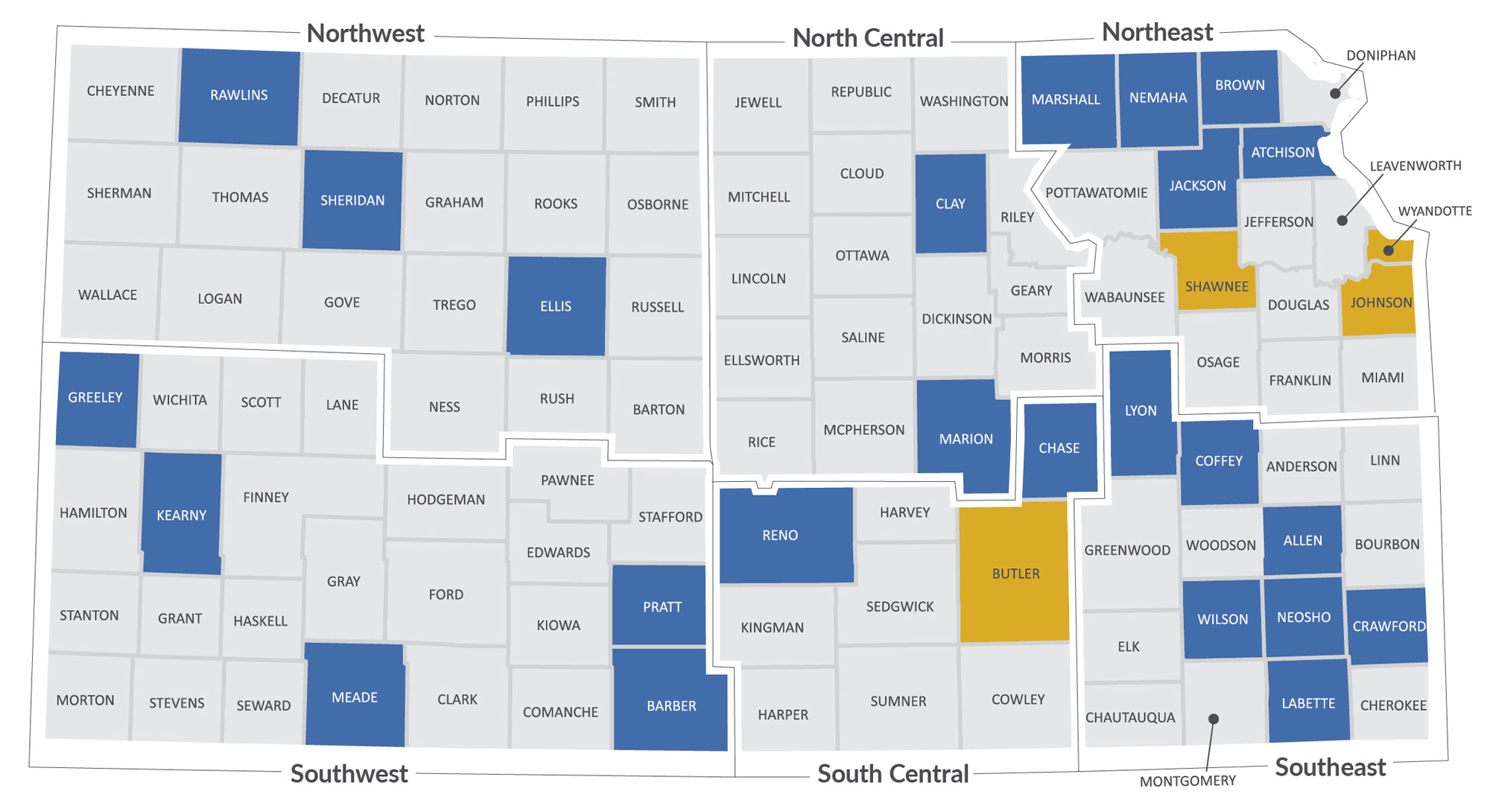
From 2019–2023, FORHP distributed 75 awards to 34 organizations in 28 Kansas counties. The organizations ranged in size, capacity and geographic location. FORHP-funded projects reached all corners of Kansas, illustrating both the wide geographic reach of these investments and their ability to address local and statewide needs (Figure 6).

One quarter of all Kansas counties saw FORHP funding awarded to a lead organization in their jurisdiction. Shawnee and Johnson counties received the most FORHP awards from 2019-2023, with 17 and 10 awards, respectively. In Shawnee county, all 17 awards were distributed to KDHE across five unique programs. In Johnson County, the 10 awards represented five different programs and were distributed to two different grantees. Those counties were followed by three rural counties — Ellis, Marshall and Sheridan — each with five awards.

The Kansas-based organizations that received FORHP funding — from large, non-rural entities to smaller, community-based groups — included the state health department, hospitals, clinics, school districts, universities, local health departments and nonprofits. This mix of local, regional, statewide and nationally focused organizations reflects FORHP’s strategy of supporting both high-capacity and community-based organizations to improve rural health.

In Northwest Kansas, Sheridan County received $800,000 (2019–2022) through the Small Health Care Provider Quality Improvement Program to improve patient outcomes. In Southwest Kansas, Greeley County Health Services, Meade Hospital District, Kiowa District Hospital and Kearney County Hospital each received between $49,000 and $150,000 from the Rural Health Clinic Vaccine Confidence Program to enhance vaccination efforts.

In North Central Kansas, Clay County Medical Center received $198,000 through the Rural Health Clinic Vaccine Confidence Program, while in South Central Kansas, the El Dorado Clinic received $50,000 under the same program. Also in South Central Kansas, Susan B. Allen Memorial Hospital in Butler County was awarded $189,000 through the Rural Health Care Services Outreach Grant Program to expand rural health care delivery.

In Northeast Kansas, Nemaha Valley Community Hospital received $300,000 through the Rural Health Network Development Program to strengthen care networks. The National Rural Health Association (NRHA), based in Johnson County, received more than $2.3 million annually (2019-2023) through the Rural Health Best Practices and Community Development Cooperative Agreement. The University of Kansas Medical Center in Johnson and Wyandotte counties received multiple telehealth focused awards, including the Telehealth Network Grant and the Telehealth Resource Center Grant.

In Southeast Kansas, Thrive Allen County was awarded $1.2 million (2019–2021) through the Rural Communities Opioid Response Program (RCORP) Planning and Implementation Program to expand substance use disorder resources.

These examples illustrate how FORHP funding supported a range of priorities during the study period — from pandemic response and behavioral health to workforce development and health care delivery — while reaching grantees across all regions of Kansas.


Figure 6. FORHP Grantees in Kansas By County

Note: An “award” refers to one grant allocated to one grantee for a single year. Multiple years of funding in a single program were counted separately for each year. Federal Office of Rural Health Policy (FORHP) programs vary in size and scope, which impacts award amounts. Awards were classified based on the county of the recipient organization and their corresponding FORHP rurality classification. The Kansas Department of Health and Environment’s District Office Regional Map was used for illustrative purposes only.

Source: Kansas Health Institute analysis of data from FORHP within the Health Resources and Services Administration (HRSA). Awarded Grants file downloaded from https://data.hrsa.gov/data/download in October 2024. The Awarded Grants file is regularly updated by FORHP; however, this analysis uses fixed historical data from 2019–2023. County and Census Tract Excel file with FORHP rurality classifications downloaded from https://www.hrsa.gov/rural-health/about-us/what-is-rural/data-files in February 2025.

Discussion

From 2019–2023, FORHP funding played a significant role in supporting rural communities through direct grantmaking, especially during the COVID-19 pandemic. This brief highlights how funding supported programs with different focus areas, responded to emerging public health needs, and was distributed across the country.

While all FORHP awards are designed to support rural health, individual programs and awards — and the organizations that receive them — come in many forms. Notably, the analysis found a significant share of FORHP grants were awarded to organizations in not fully rural counties — such as state agencies, universities and national associations. These organizations may be well-positioned to implement large and wide-reaching programs, such as complex research or nationwide technical assistance programs that serve rural communities across an entire state or nationwide.

Looking Ahead: What’s Next for Rural Communities?

Looking ahead, federal funding is likely to remain an important source of support for rural health initiatives, though the priorities and approaches continue to evolve. The One Big Beautiful Bill Act (OBBBA), or H.R. 1, established the Rural Health Transformation (RHT) Program. The program is a five-year, $50 billion investment designed to support state efforts to strengthen rural health systems as they face projected Medicaid spending cuts, which are also a result of the Act.

While Congress has not finalized the appropriations bills that fund HHS programs, both chambers’ relevant funding committees have proposed continued support for FORHP programs, with the House and Senate proposing approximately $393 million and $374 million in funding, respectively. Both maintain funding for current programs, with the house bill also including funding for two additional hospital-focused initiatives. Final fiscal year (FY) 2026 appropriations will depend on whether Congress reconciles the two bills or enacts a stopgap measure, shaping future funding levels across HHS programs, including those that support rural health.

Federal priorities can shift over time, bringing new opportunities as well as changes to established grant programs. Such shifts reflect the evolving needs, challenges and policy agendas shaping rural health funding at the federal level. Continued attention to these shifts can help ensure that rural communities are well-positioned to navigate changing federal funding opportunities and can maintain progress in strengthening infrastructure and improving access to care.

About Kansas Health Institute

The Kansas Health Institute supports effective policymaking through nonpartisan research, education and engagement. KHI believes evidence-based information, objective analysis and civil dialogue enable policy leaders to be champions for a healthier Kansas. Established in 1995 with a multiyear grant from the Kansas Health Foundation, KHI is a nonprofit, nonpartisan educational organization based in Topeka.

Learn More About KHI